The Debt Detective: Uncovering Hidden Financial Risks
Two friends earn $100,000 annually. One lives comfortably, the other is stressed and broke. The difference? Hidden debt that’s crushing…
Two friends earn $100,000 annually. One lives comfortably, the other is stressed and broke. The difference? Hidden debt that’s crushing their finances.
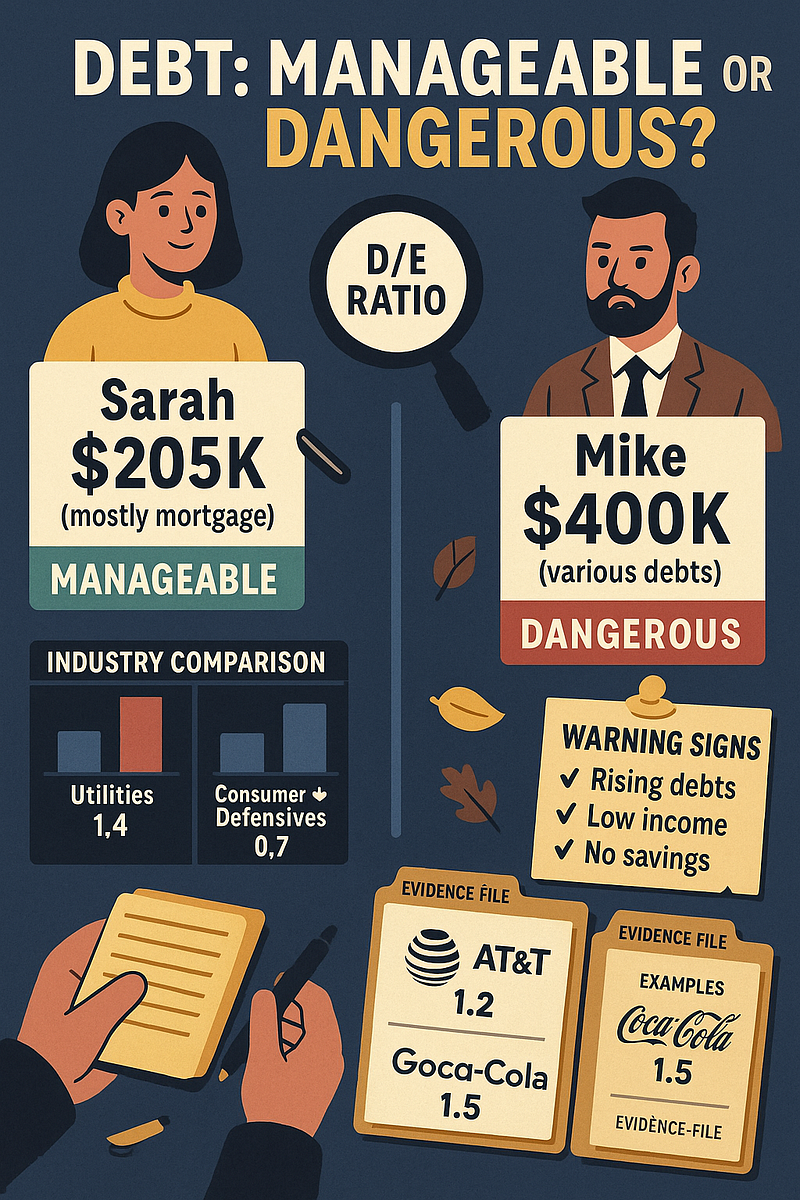
The Story: Sarah: $100,000 salary, $200,000 mortgage, $5,000 credit card debt
- Debt-to-Income: 205% ($205,000 ÷ $100,000)
- Status: Managing well, mortgage is “good debt”
Mike: $100,000 salary, $400,000 in various debts
- Debt-to-Income: 400% ($400,000 ÷ $100,000)
- Status: Financial crisis waiting to happen
The Corporate Parallel: Companies work exactly the same way. The Debt-to-Equity ratio reveals which companies are Sarah (manageable) or Mike (dangerous).
Formula: Debt-to-Equity = Total Debt ÷ Shareholders’ Equity
Real Company Examples:
Conservative Company (Apple):
- Total Debt: $123 billion
- Shareholders’ Equity: $62 billion
- Debt-to-Equity: 1.98 (manageable for tech giant)
Leveraged Company (Ford):
- Total Debt: $156 billion
- Shareholders’ Equity: $45 billion
- Debt-to-Equity: 3.47 (high but normal for automakers)
Danger Zone Company:
- Debt-to-Equity above 5.0 = Red flag territory
- Could struggle during economic downturns
Industry Context Matters:
- Utilities: 2–4 D/E normal (steady cash flows support debt)
- Tech companies: 0.5–1.5 ideal (don’t need much debt)
- Airlines: 3–6 common (capital intensive industry)
- Retailers: 1–3 typical (inventory financing needs)
The Debt Detective’s Checklist:
- ✅ Compare to industry averages (Ford vs. Apple isn’t fair)
- ✅ Check debt trends (increasing or decreasing over time)
- ✅ Examine interest coverage (can they afford debt payments)
- ✅ Look at economic sensitivity (cyclical businesses need lower debt)
Warning Signs:
- Debt-to-Equity increasing rapidly
- Interest payments consuming >30% of profits
- Taking on debt while business is declining
Action Step: Calculate the debt-to-equity ratio for your largest stock holdings. Are you invested in Sarah-type companies or Mike-type disasters?
Think About This: Would you lend money to someone already drowning in debt? Then why invest in overleveraged companies?