Portfolio Diversification Analysis Guide
Diversification analysis helps investors understand whether their portfolios are balanced across sectors, industries, and risk profiles.

Diversification is one of the most widely accepted principles in investing. The idea is simple: by spreading investments across multiple assets, investors reduce the risk that a single event will severely damage their portfolio.
However, diversification is often misunderstood. Simply holding many stocks does not necessarily mean a portfolio is well diversified.
This is where diversification analysis becomes important.
What Diversification Really Means
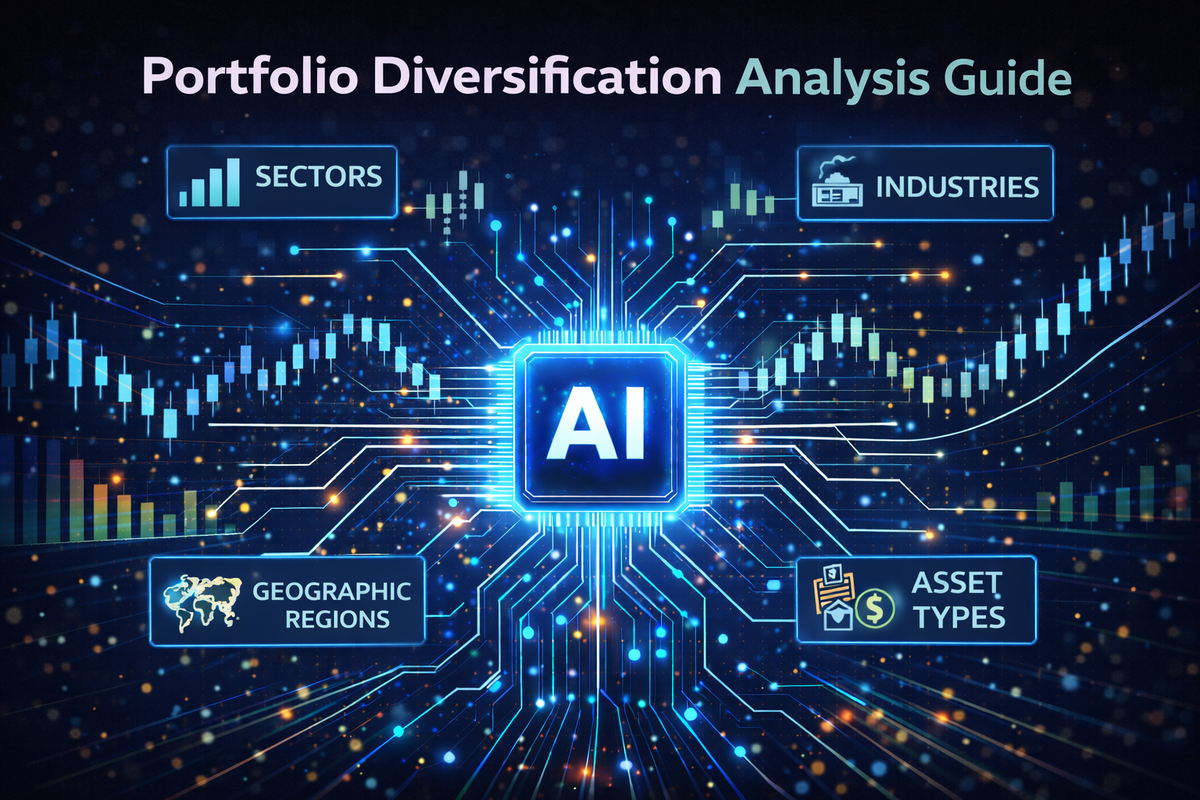
True diversification involves distributing investments across different:
- sectors
- industries
- geographic regions
- asset types
A portfolio heavily concentrated in one area may appear diversified but still carry significant risk.
Why Diversification Matters
Markets behave unpredictably. Certain industries may outperform during specific economic cycles while others decline.
A diversified portfolio reduces the impact of these fluctuations.
Benefits of diversification include:
- Reduced volatility
- Lower sector risk
- More stable long-term performance
How AI Evaluates Diversification
Artificial intelligence helps investors analyze diversification more effectively.
AI tools evaluate:
- sector distribution
- industry overlap
- correlation between assets
- historical performance patterns
These insights help investors understand whether their portfolios are truly diversified.
Common Diversification Mistakes
Many investors unintentionally create portfolios with overlapping exposure.
Examples include:
Owning multiple companies from the same industry
Investing heavily in one geographic region
Holding highly correlated stocks
AI analytics can highlight these patterns.
AI-Powered Portfolio Insights
Platforms like StockSageAI analyze portfolio diversification by examining multiple financial datasets simultaneously.
These insights help investors better understand how different investments interact within a portfolio.