Company Size Matters: The Cruise Ship vs Speedboat Guide
Would you rather sail through a storm on a massive cruise ship or a speedboat? Your answer reveals your perfect stock strategy.
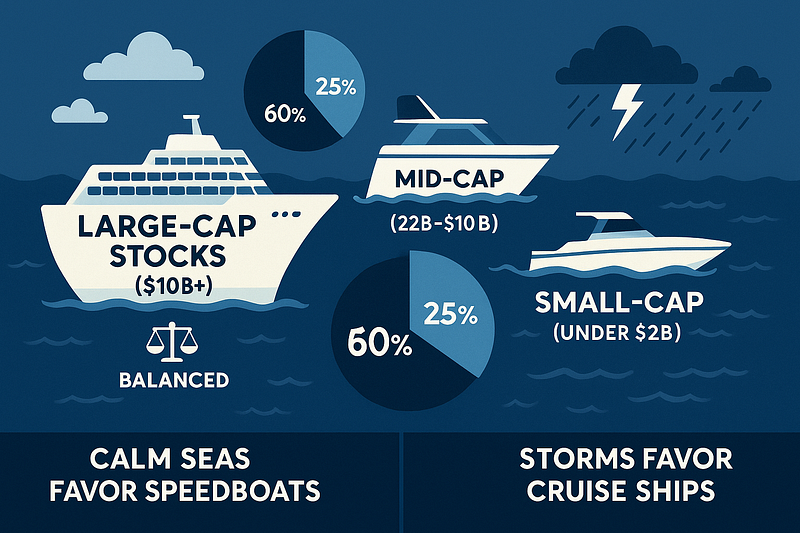
Would you rather sail through a storm on a massive cruise ship or a speedboat? Your answer reveals your perfect stock strategy.
Picture two boats in choppy waters:
- The Cruise Ship: Massive, stable, moves slowly but barely rocks
- The Speedboat: Small, agile, fast but bounces wildly in waves
This is exactly how market capitalization works in stocks.
Market Cap Categories: Large-Cap Stocks ($10B+) = Cruise Ships
- Examples: Apple ($3T), Microsoft ($2.8T), Amazon ($1.5T)
- Pros: Stable, weather economic storms well, steady growth
- Cons: Slower growth, limited upside potential
Mid-Cap Stocks ($2B-$10B) = Yachts
- Examples: Roku ($2.1B), Peloton ($1.9B)
- Pros: Balance of stability and growth potential
- Cons: More volatile than large-caps, less research coverage
Small-Cap Stocks (Under $2B) = Speedboats
- Examples: Many biotech startups, emerging tech companies
- Pros: Explosive growth potential, nimble operations
- Cons: High volatility, higher bankruptcy risk
The Weather Report:
- Calm Markets: Speedboats (small-caps) zoom ahead
- Stormy Markets: Cruise ships (large-caps) provide safety
- Mixed Conditions: Yachts (mid-caps) offer best balance
Smart Allocation Strategy: For most investors:
- 60% Large-cap (cruise ships)
- 25% Mid-cap (yachts)
- 15% Small-cap (speedboats)
Action Step: Calculate your portfolio’s market cap mix. Are you overloaded with speedboats when storm clouds are gathering?
Think About This: In 2008, speedboats (small-caps) sank 37% while cruise ships (large-caps) dropped only 27%. Which would you have preferred?
For more such insights visit www.stocksageai.com and use the platform to make intelligent investment decisions.