How to Analyze a Stock Portfolio Using AI
Discover how artificial intelligence can help investors analyze their stock portfolios faster by identifying diversification gaps, risk exposure, and market patterns.


Why Portfolio Analysis Matters
Every investor eventually reaches a point where simply buying stocks is no longer enough. Once you hold multiple investments, the real challenge becomes understanding how those investments interact with each other.
A portfolio may look diversified at first glance, but hidden risks can exist beneath the surface. For example, several companies may operate in the same industry, respond similarly to economic events, or rely on similar market conditions.
Analyzing a portfolio helps investors understand:
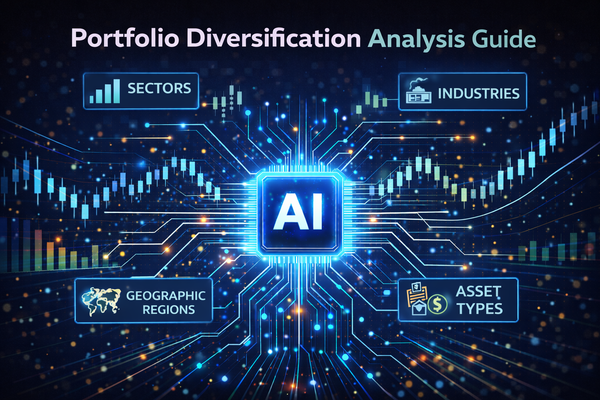
- diversification across sectors
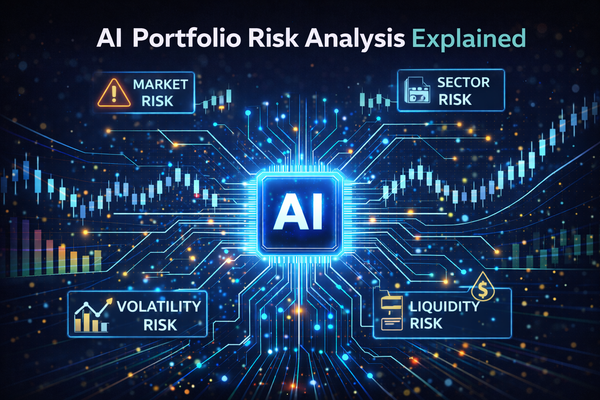
- exposure to market risks
- concentration in specific industries
- overall portfolio stability
Traditionally, this analysis required spreadsheets and manual calculations. Today, artificial intelligence can perform this analysis much faster.
What It Means to Analyze a Stock Portfolio
When investors analyze a stock portfolio, they are trying to answer a few important questions.
Is the portfolio diversified?
Is there too much exposure to one sector?
Are certain stocks creating too much volatility?
How does the portfolio behave during market downturns?
Answering these questions requires analyzing many different types of financial data at the same time. This is where AI becomes particularly useful.
How AI Helps Analyze Portfolios
Artificial intelligence can process large financial datasets quickly and identify patterns that may not be obvious to investors.
AI-powered portfolio analysis tools examine:
Portfolio allocation
The percentage of capital invested in each stock or sector.
Correlation between holdings
Whether different stocks move together or independently.
Risk exposure
How sensitive the portfolio may be to market events.
Performance drivers
Which investments contribute most to gains or losses.
By analyzing these elements simultaneously, AI provides investors with deeper insights into portfolio structure.
Key Metrics AI Uses in Portfolio Analysis
Diversification Score
AI systems measure how evenly investments are distributed across sectors and industries.
Volatility Analysis
This measures how much the portfolio fluctuates over time.
Sector Allocation
AI identifies whether the portfolio is heavily weighted toward technology, finance, healthcare, or other sectors.
Correlation Patterns
Some stocks tend to move together. AI can detect these relationships and highlight hidden concentration risks.
Common Portfolio Mistakes Investors Make
Many investors unintentionally create portfolios with hidden weaknesses.
Examples include:
Overconcentration in one sector
Investors may unknowingly hold multiple companies from the same industry.
Holding highly correlated stocks
Stocks that move together reduce diversification benefits.
Ignoring portfolio balance
Some positions may become too large over time.
AI tools help detect these issues early.
How Platforms Like StockSageAI Help
Modern analytics platforms such as StockSageAI help investors interpret complex financial data using AI-powered analytics.
These platforms focus on providing insights such as:
- portfolio diversification analysis
- stock-level analytics
- market trend interpretation
- risk exposure insights
Instead of providing stock recommendations, the goal is to help investors better understand the structure and behavior of their portfolios.
Learn more:
The Future of Portfolio Analysis
As financial markets generate increasing amounts of data, investors will rely more on AI-powered analytics to understand their portfolios.
Artificial intelligence makes it possible to analyze complex financial relationships quickly and present them in a way that is easier to interpret.
For investors managing multiple holdings, AI portfolio analysis is becoming an essential tool for understanding risk and maintaining diversification.